
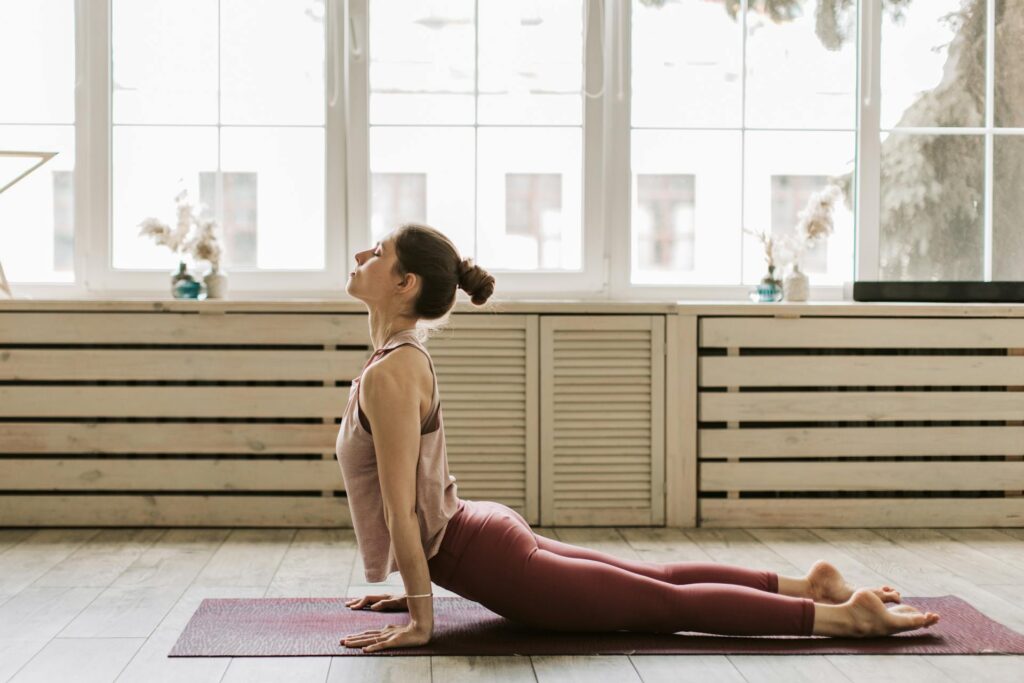
Woman practicing yoga at home
It’s easy to create a space where you can practice at home

Yoga practitioners know the feeling: you unroll your mat, take one breath, and suddenly you’re stepping over dumbbells, moving a lamp, and shifting a chair—again. A multipurpose wellness room solves that daily friction by giving your practice a consistent “home base” that still flexes for strength work, recovery, and deep rest. The goal isn’t to create a showroom studio; it’s to remodel a single room so it supports your body and nervous system—without visual noise.

The quick version you can act on

One flexible room works when it’s designed around clear zones and invisible storage, not around equipment. Think of it as a calm yoga studio first, with fitness and recovery tools that “disappear” fast. Prioritize open floor space, a few lighting layers, and materials that feel good under bare feet. The payoff is simple: fewer barriers to practice and a room that invites you in on low-energy days.

Start with a simple problem → solution → result

Surfaces and how they feel in practice

ElementBest forWatch-outsYoga-friendly tip
Flooring (hard
surface)
Stability, standing
balance, weights
Cold, loud,
slippery
Add one high-quality rug outside
the practice rectangle; keep the
mat area clear
Flooring
(cork/rubber)
Quiet movement,
joint comfort
Can smell at first; may markChoose low-VOC options and let it
air out before heavy use
Wall finish
(washable
paint)
Easy cleanup, calm
backdrop
Gloss can glareUse a soft/matte finish to reduce
visual “buzz”
Textiles
(curtains,
cushions)
Sound softening,
coziness
Dust, clutter creepAdd a high-quality rug outside
the practice rectangle; keep the
mat area clear

Power and control upgrades that make the room feel effortless

When you’re remodeling, electrical planning is the quiet difference between “nice room” and “daily-use room.” Extra outlets and (where appropriate) dedicated circuits reduce extension-cord sprawl for treadmills, rowers, space heaters, or infrared/recovery devices; dimmable lighting and smart controls make it easy to shift from upbeat movement to a slower, candlelit savasana vibe. If you’re replacing switches, adding outlets, or upgrading fixtures, start with reliable components from known manufacturers—because the calming room you want depends on systems that work consistently. If you prefer the convenience of ordering ahead, you can buy electrical parts online and have what you need ready before any electrical work begins.

Storage that doesn’t sabotage serenity

A wellness room fails when equipment is always visible. Aim for closed storage at eye level and below: cabinets, a credenza, or built-ins. Open shelves look pretty in photos, but they collect visual “to-do lists.”

A practical approach: store by sequence, not by category. Keep your most common flow props together (blocks + strap + blanket), recovery tools together (balls, bands, massage device), and strength tools together (kettlebell, sliders, etc.). When you’re done, everything returns to its home in under a minute.

One excellent resource to steal ideas from (without copying anyone’s vibe)

If you want inspiration that stays grounded in real life, Yoga Journal has a classic piece on creating a home practice space that’s more about consistency than décor. It’s useful because it emphasizes practical choices—like reducing setup time and making the room easy to return to—which is exactly what a multipurpose wellness room needs. Read it once, then walk through your room and identify the one obstacle that makes you not practice (usually clutter or setup friction).

FAQ

How big does a multipurpose wellness room need to be for yoga?
It can be small. The key is an uninterrupted area that fits your mat plus space for your arms and a few steps in each direction.

Should I keep a mirror in a yoga-focused wellness room?
Only if it supports your practice without pulling you into self-critique. Many yogis prefer a softer, less visually “performative” environment.

What are the most important upgrades if I’m on a budget?
Decluttered storage, a comfortable floor experience, and lighting you can soften at night. Those three change the room’s usability fast.

Conclusion

A multipurpose wellness space works when it’s designed like a yoga room that can briefly “costume change” into a training or recovery space—and then return to calmness. Keep the mat area sacred, hide the gear, and let lighting do the emotional heavy lifting. Remodel decisions that reduce friction (setup time, clutter, harsh glare) are the ones you’ll feel every day. Over time, that consistency becomes its own form of well-being.

Leave a Reply

Your email address will not be published. Required fields are marked *

Jennifer Miranda

Jenn took her very first yoga class in 2012 while searching for a fitness
routine that would improve her strength and flexibility. After that first class,
she got hooked. Yoga changed her life not only because of the physical
benefits of doing yoga but she also discovered that yoga has greatly improved
her mental focus and self-awareness. Because of this, she decided to share
her practice with others. Jenn completed her 200-hour yoga teacher training
in April 2017 and is a registered yoga instructor (RYT-200) with the Yoga
Alliance.

Jenn’s ultimate goal as a yoga teacher is to lead students towards a deeper
level of physical fitness and healthy lifestyle along with mental peace. She
loves to help beginners feel comfortable in their practice and learn essential
postures while motivating and challenging the more experienced yogis and
ensuring a safe practice for everyone. Maintaining her own personal practice
while learning and gaining inspiration from other yogis enables her to design
innovative, energetic, and fun sequences that are fit for all levels.

Jenn is also a professional portrait photographer and her love of both yoga
and photography paved the way for Yoga Photography. The skills she has
acquired over the years allow her to best capture yogis demonstrating beauty,
strength, and grace through movement.

Carrie Del Purgatorio

Carrie has had a consistent, daily, at-home yoga and meditation practice for many years and was finally inspired to take her love of yoga to the next level and embark on teacher training in 2022. She enjoys teaching a more powerful yoga flow with a strong focus on breathing. Carrie firmly believes that a little self-love goes a long way, and she feels extremely grateful to be able to share her practice with people.

Zaina Ileiwat

Zaina has been an RYT-200 trained instructor since 2020 with additional mindfulness and breath work training. She curates her classes specifically for the success of her students while ensuring there are options for everyone. She brings energy, fun, and clear guidance throughout the class. Zaina finds her greatest joy seeing beginner students find comfort as well as experienced students still finding challenge in her class. Expect some upbeat music and humor to be woven throughout the practice and a complete wind down with some breath work to send you off in bliss.

Theresa Conlon

Theresa is a Yoga Alliance certified instructor (200-hour RYT) who has been teaching since 2013. She is skilled in various yoga styles including Hatha, Ashtanga, Vinyasa Flow, Restorative, and Meditation. Theresa also brings an extensive dance background to her yoga practice, which includes teaching both modern dance and ballet. She has over 40 years of dance/theater performing experience and currently showcases her choreography as part of Bergen Dance Makers, a dance collective in northern New Jersey. Theresa’s yoga classes offer a calming mix of traditional asana postures and creative movement flows, supported by energy-moving breath. Students of all skill levels are invited to find ease and peace in their bodies/minds/spirits through the joyful bliss of yoga movement.

Carrie Parker Gastelu

Carrie Parker Gastelu, E-500 RYT, has been teaching yoga since 1993. Carrie began her journey when Yogi Raj Mani Finger initiated Carrie into the ISHTA Yoga lineage after training with Mani’s son, Yogi Raj Alan Finger. In addition, she has studied many other yoga traditions as well as anatomy, physiology, movement, and awareness practices to create an eclectic style all her own. She is known for her honest, non-dogmatic yet passionate approach.

Carrie is a regular speaker and contributor at conferences, websites, and print publications and has been featured in Fit Magazine, the Yoga Zone Book, and in the Yoga Zone Video, “Flexibility and Stress Release.”

Lisa Podesta-Coombs

When Lisa found yoga in 2008, she started to find herself again and it set her on a path of health and healing. She received her 200HR RYT certification from Raji Thron of Yoga Synthesis, and her 30HR Chakra Yoga Teacher Training certificate with Anodea Judith and holds a Y12SR (Yoga of 12 Step Recovery) certification. She is also a Holistic Health Coach (certified through the Institute for Integrative Nutrition). Lisa believes we’re all on a journey of learning how to trust ourselves; she helps her clients build that trust by supporting them in creating better habits for a better life through various functional movement modalities like yoga, barre, Pilates & strength training, mindset, and whole food nutrition.

Forever a student with a passion for people, holistic health, and self-actualization, Lisa is always embracing opportunities to advance her education to better serve; Ayurveda workshops & immersions have been of particular interest as she continues to deepen her knowledge of and experience with food as medicine and she recently completed Unleash Her Power Within, a transformational program of rediscovering our truest selves, powered by Tony Robbins.  

As she continues to give herself space and grace to nourish her natural self and actualize her potential, Lisa continues to share the gift of movement as medicine to inspire authenticity & health in body, mind, and spirit. You can expect mindful, accessible, dynamic, playful, and uplifting classes from Lisa.

Roberto Reynoso

Roberto Reynoso completed basic training in 2017 at Jaipure Yoga in Montclair. The training was Hatha Vinyasa based. Roberto has created his own style from the various styles of yoga he has loved practicing. He is well-versed in Iyengar, Vinyasa, and Restorative Yoga. He hopes to teach poses and themes in each class that inform, challenge, and guide students toward a better understanding of how to make the shapes and the anatomy behind the poses. He hopes to help students find more space when they leave and also hopes to help people grow in awareness through breath, alignment, and movement.