
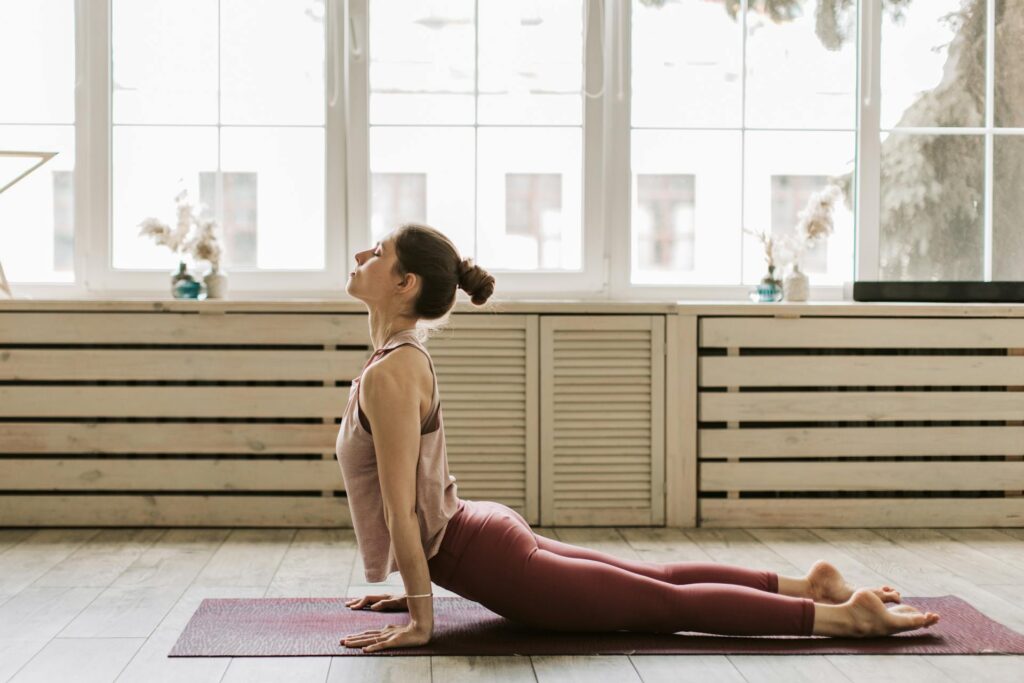
Yoga practitioners know the feeling: you unroll your mat, take one breath, and suddenly you’re stepping over dumbbells, moving a lamp, and shifting a chair—again. A multipurpose wellness room solves that daily friction by giving your practice a consistent “home base” that still flexes for strength work, recovery, and deep rest. The goal isn’t to create a showroom studio; it’s to remodel a single room so it supports your body and nervous system—without visual noise.
The quick version you can act on
One flexible room works when it’s designed around clear zones and invisible storage, not around equipment. Think of it as a calm yoga studio first, with fitness and recovery tools that “disappear” fast. Prioritize open floor space, a few lighting layers, and materials that feel good under bare feet. The payoff is simple: fewer barriers to practice and a room that invites you in on low-energy days.
Start with a simple problem → solution → result
- Problem: Most “home gym” setups are clutter magnets, and clutter is the enemy of consistency—especially for yogis who rely on calm, ritual, and breath.
- Solution: Remodel one room with (1) a dedicated open practice area, (2) closed storage for gear, and (3) lighting and surfaces that shift from energizing to soothing.
- Result: You move more often, reset faster, and stop treating wellness as a special occasion that requires rearranging your life.
Surfaces and how they feel in practice
| Element | Best for | Watch-outs | Yoga-friendly tip |
| Flooring (hard surface) | Stability, standing balance, weights | Cold, loud, slippery | Add one high-quality rug outside the practice rectangle; keep the mat area clear |
| Flooring (cork/rubber) | Quiet movement, joint comfort | Can smell at first; may mark | Choose low-VOC options and let it air out before heavy use |
| Wall finish (washable paint) | Easy cleanup, calm backdrop | Gloss can glare | Use a soft/matte finish to reduce visual “buzz” |
| Textiles (curtains, cushions) | Sound softening, coziness | Dust, clutter creep | Add a high-quality rug outside the practice rectangle; keep the mat area clear |
Power and control upgrades that make the room feel effortless
When you’re remodeling, electrical planning is the quiet difference between “nice room” and “daily-use room.” Extra outlets and (where appropriate) dedicated circuits reduce extension-cord sprawl for treadmills, rowers, space heaters, or infrared/recovery devices; dimmable lighting and smart controls make it easy to shift from upbeat movement to a slower, candlelit savasana vibe. If you’re replacing switches, adding outlets, or upgrading fixtures, start with reliable components from known manufacturers—because the calming room you want depends on systems that work consistently. If you prefer the convenience of ordering ahead, you can buy electrical parts online and have what you need ready before any electrical work begins.
Storage that doesn’t sabotage serenity
A wellness room fails when equipment is always visible. Aim for closed storage at eye level and below: cabinets, a credenza, or built-ins. Open shelves look pretty in photos, but they collect visual “to-do lists.”
A practical approach: store by sequence, not by category. Keep your most common flow props together (blocks + strap + blanket), recovery tools together (balls, bands, massage device), and strength tools together (kettlebell, sliders, etc.). When you’re done, everything returns to its home in under a minute.
One excellent resource to steal ideas from (without copying anyone’s vibe)
If you want inspiration that stays grounded in real life, Yoga Journal has a classic piece on creating a home practice space that’s more about consistency than décor. It’s useful because it emphasizes practical choices—like reducing setup time and making the room easy to return to—which is exactly what a multipurpose wellness room needs. Read it once, then walk through your room and identify the one obstacle that makes you not practice (usually clutter or setup friction).
FAQ
How big does a multipurpose wellness room need to be for yoga?
It can be small. The key is an uninterrupted area that fits your mat plus space for your arms and a few steps in each direction.
Should I keep a mirror in a yoga-focused wellness room?
Only if it supports your practice without pulling you into self-critique. Many yogis prefer a softer, less visually “performative” environment.
What are the most important upgrades if I’m on a budget?
Decluttered storage, a comfortable floor experience, and lighting you can soften at night. Those three change the room’s usability fast.
Conclusion
A multipurpose wellness space works when it’s designed like a yoga room that can briefly “costume change” into a training or recovery space—and then return to calmness. Keep the mat area sacred, hide the gear, and let lighting do the emotional heavy lifting. Remodel decisions that reduce friction (setup time, clutter, harsh glare) are the ones you’ll feel every day. Over time, that consistency becomes its own form of well-being.